Trump’s Banking Order Risks Driving Millions Into Crypto Shadow System
President Trump’s strict immigration-focused financial order could spark a massive migration toward stablecoins and decentralized...
Quick overview
- New migration policies and digital assets are creating a feedback loop on Wall Street and in the crypto sector.
- The Trump administration's executive order aims to tighten banking standards, potentially driving capital towards decentralized networks.
- Stricter compliance rules could lead to increased decentralized stablecoin usage, while also attracting more federal scrutiny on crypto transactions.
- The evolving landscape may result in a multibillion-dollar decentralized financial system with reduced customer protections.
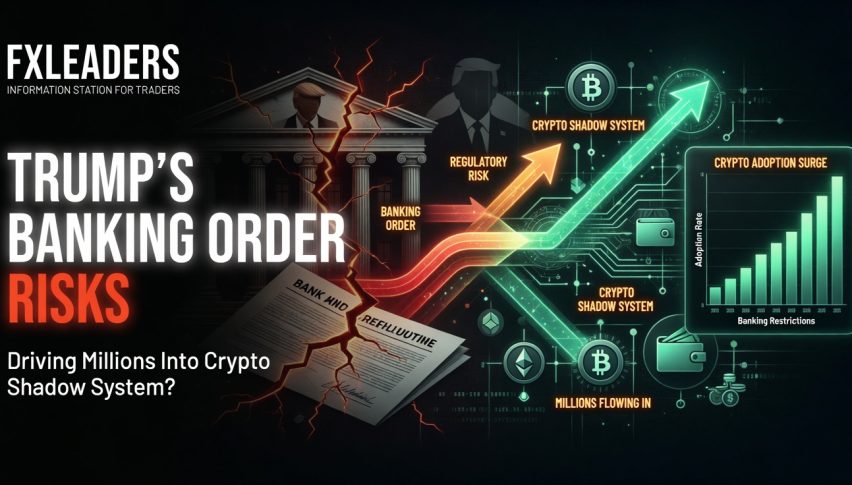
The interplay of new migration policies and digital assets is setting off a kind of feedback loop on Wall Street and in the crypto sector that almost reads as ironic. As the US Treasury Department under Treasury Secretary Scott Bessent gets ready to draft compliance rules to back up a May 19 executive order, Wall Street trading desks are watching to see whether stricter traditional banking standards will spark a rush of capital to decentralized networks.
The Macro Irony: From “Chokepoint” to Alternative Lifelines
The Trump executive order directs traditional financial institutions to overhaul how they identify customers to plug loopholes, but it mirrors what economists have historically called “debanking” where strict banking friction sends capital into censorship-resistant networks. The structural irony is clear as the Trump family invested in World Liberty Financial, a decentralized finance protocol that Donald Trump Jr. created as a hedge against perceived banking vulnerability or debanking.
In the meantime, the Trump administration is also trying to tighten its control over the crypto sector. Secretary Bessent recently announced that a federal task force successfully seized about $1 billion of digital assets associated with foreign military entities, showing that federal authorities’ grasp over blockchain investigations has strengthened along with their ability to pass policy.
The Shadow Banking Migration: Stablecoins and Infrastructure Shifts
| Asset / Infrastructure Class | Core Migration Driver | Systemic Vulnerabilities & Structural Risks |
|
USD Stablecoins (USDT / USDC)
|
Low-friction, sub-second settlement speeds; borderless dollar-pegged transfers bypassing legacy SWIFT channels. | Complete lack of institutional consumer protections; finality risks; vulnerability to smart contract exploits. |
|
Bitcoin ATMs (BTM Networks)
|
Historical physical-to-digital fiat on-ramps providing immediate local alternative liquidity access. |
Severe structural decay; Bitcoin Depot’s recent Chapter 11 bankruptcy highlights the impact of tightening state compliance caps.
|
|
Layer-2 Peer-to-Peer Networks
|
Cheap micro-transaction execution for international remittances and daily consumer utility. | Fragmented liquidity; complex technological barriers for underbanked or non-technical retail users. |
Structural Outlook for Digital Alternatives
Immigrant communities around the world depend on international financial systems. Stricter customer protocols for US traditional banks could accelerate non-custodial stablecoin usage to meet that demand.
Pushing large sections of the population out of banking completely would help build a multibillion-dollar decentralized financial system where there is no customer safety, and the federal government can’t watch the flow of funds as easily.
The rules Treasury Secretary Bessent is about to publish will likely send a big shock wave through the crypto market. Tighter compliance rules for commercial banking sectors could lead to a surge in decentralized stablecoin transaction volume. That surge in crypto use comes at the same time that the US economy is seeing less access to traditional financial on-ramps, like Bitcoin Depot shutting down many of its ATM locations.
The result is a double-edged sword for traders: More macro capital could come into the crypto space, but also, the federal government may take more attention to emergency transactions and push for permanent federal rules to control the decentralized sector, with the rest of the world along for the ride.
- Check out our free forex signals
- Follow the top economic events on FX Leaders economic calendar
- Trade better, discover more Forex Trading Strategies
- Open a FREE Trading Account
- Read our latest reviews on: Avatrade, Exness, HFM and XM

Related Articles

Sidebar rates

Related Posts
 Save
Save