Congo Oil Struggles Amid 3.6% GDP Growth Forecast, Traders Eye CFA Franc Stability
Congo faces challenges in oil sector despite 3.6% GDP growth forecast. Traders watch CFA franc and BEAC policy.

Quick overview
- The Republic of Congo is projected to achieve a GDP growth of 3.6% by 2026, despite ongoing struggles in its oil sector.
- Challenges such as mismanagement, fluctuating oil prices, and infrastructure issues continue to hinder the oil industry's performance.
- The stability of the CFA franc is crucial for traders, influenced by the monetary policy of the Bank of Central African States (BEAC).
- Traders should monitor the oil sector's trajectory and BVMAC activities for insights into potential trading opportunities.
Live USD/CDF Chart

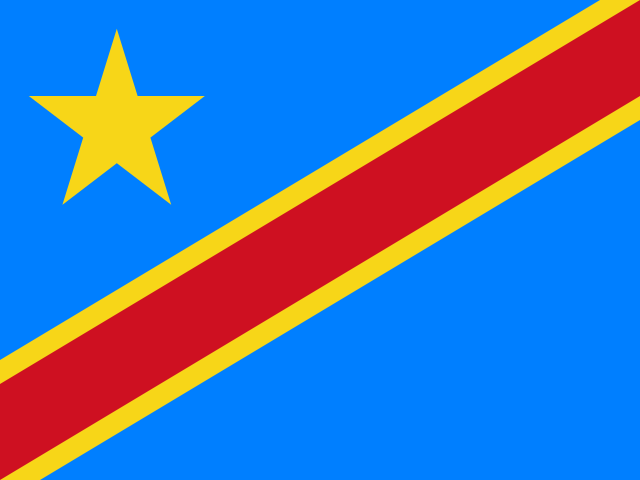
As the Republic of Congo projects a GDP growth of 3.6% by 2026, the nation’s oil sector struggles to deliver on its development promises, leaving traders to closely monitor the CFA franc’s stability.
Behind the Headline
The oil industry in Africa, including the Republic of Congo, was once heralded as a beacon of economic prosperity. However, as reported by Tchadinfos, the sector has often fallen short of its grand promises. Mismanagement, fluctuating global oil prices, and infrastructure bottlenecks have all contributed to this underperformance. Despite being one of the continent’s largest oil producers, the Republic of Congo continues to grapple with these persistent challenges.
Republic of Congo Market Angle
The significance of the CFA franc and the role of the Bank of Central African States (BEAC) are pivotal in this context. The BEAC’s monetary policy decisions directly impact the CFA franc, a currency shared by several African countries, including the Republic of Congo. Stability in the CFA franc is crucial for traders, especially those dealing with forex and commodities on the Central African Stock Exchange (BVMAC). The projected GDP growth could positively influence the currency’s stability, offering a buffer against external shocks.
Contrary Angle
While the outlook suggests economic growth, skeptics point to the potential over-reliance on oil. The global shift towards renewable energy, coupled with geopolitical tensions, such as those highlighted by SenePlus regarding the Middle East conflicts, could pose risks to Congo’s oil revenues. Additionally, countries like Morocco, noted by Le Matin.ma, are less exposed to such conflicts, suggesting a need for Congo to diversify its economic dependencies.
Why Traders Should Care
For traders, the key focus should be on the CFA franc’s performance and BEAC’s monetary policy. The anticipated GDP growth may instill confidence in the currency, potentially offering lucrative trading opportunities. Monitoring BVMAC activities can provide insights into regional bond issuances and forex movements. Additionally, understanding the oil sector’s trajectory is crucial, as it remains a significant contributor to the nation’s economy.
Conclusion
Despite the challenges in the oil sector, the Republic of Congo’s projected GDP growth offers a positive outlook. However, traders must remain vigilant, keeping a close watch on BEAC’s policy, the CFA franc’s stability, and potential global economic shifts. These factors will be instrumental in navigating the complex landscape of Congo’s market dynamics.
- Check out our free forex signals
- Follow the top economic events on FX Leaders economic calendar
- Trade better, discover more Forex Trading Strategies
- Open a FREE Trading Account
- Read our latest reviews on: Avatrade, Exness, HFM and XM

Related Articles



Sidebar rates

Related Posts
 Save
Save