BA Stock Soars as 737 Max Deliveries and Air Force One Progress Impress Investors after Boeing Reports Q2 Financial Results
Boeing shares climbed nearly 5% above $220 after its latest earnings report, as investors looked beyond a quarterly loss and focused instead on improving deliveries, higher revenue, and the company's commitment to accelerating its long-delayed Air Force One program.
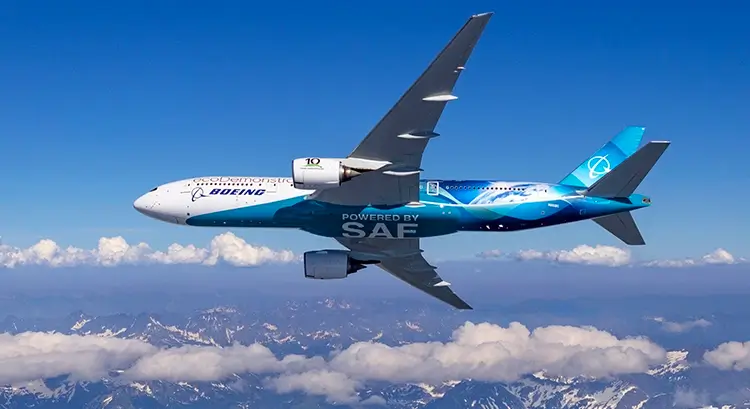
Boeing shares climbed nearly 5% above $220 after its latest earnings report, as investors looked beyond a quarterly loss and focused instead on improving deliveries, higher revenue, and the company’s commitment to accelerating its long-delayed Air Force One program.
Air Force One Costs Weigh on Q2 Results
Boeing reported a second-quarter net loss of $428 million, or $0.67 per share, compared with a loss of $612 million, or $0.92 per share, during the same period last year.
While the company remained unprofitable, the narrowing loss compared with a year earlier provided an encouraging sign.
The biggest financial setback came from the delayed Air Force One program.
Boeing recorded a $280 million loss related to the development of two 747 aircraft that will eventually serve as the next-generation Air Force One planes for the U.S. government.
The company said it has increased investment and resources to accelerate progress on the program and continues to expect the first delivery in 2028.
Chief Executive Officer Kelly Ortberg acknowledged that development programs remain challenging but emphasized the importance of delivering the aircraft on schedule.
The increased spending may have hurt short-term earnings, but investors appear to view the additional investment as a positive step toward resolving one of Boeing’s most closely watched delayed programs.
Boeing Stock Rallies Despite Quarterly Loss

Boeing shares rose nearly 5% to move above $220 following the company’s latest earnings report, with investors responding positively despite a quarterly loss.
The market reaction suggests that investors are increasingly focused on Boeing’s longer-term recovery rather than the impact of temporary costs weighing on its financial results. The aircraft manufacturer continues to invest heavily in key development programs, including the next-generation Air Force One aircraft, while simultaneously working to increase commercial aircraft production.
Although the company reported a wider-than-expected loss, the positive share-price reaction indicates growing confidence that Boeing is making progress toward restoring operational stability and strengthening its aerospace business.
Revenue Growth Provides a Stronger Foundation
Boeing’s second-quarter revenue increased 8% year over year to $24.56 billion.
The improvement was supported by stronger commercial aircraft deliveries, which increased 14% to 171 aircraft during the quarter.
The increase in deliveries represents an important development for Boeing as the company continues working to stabilize production and rebuild confidence in its commercial aerospace operations.
The company has also been increasing production of its 737 MAX aircraft, targeting a rate of 47 planes per month.
Higher production and delivery volumes could provide an important boost to future revenue and cash flow if Boeing can maintain the momentum while continuing to prioritize safety and quality.
Boeing Pushes to Restore Production Momentum
The commercial aviation market remains a major opportunity for Boeing.
Global airlines continue requiring new aircraft as passenger demand expands and older fleets need replacement. Boeing’s ability to increase production capacity could therefore position the company to benefit from strong long-term demand.
However, the company must balance production growth with strict quality controls.
Boeing is also preparing for certification of several delayed aircraft models, including the 737 MAX 7. Successfully advancing these programs could strengthen its product pipeline and improve its competitive position against Airbus.
The recovery is unlikely to happen overnight, but rising deliveries suggest Boeing is gradually moving in the right direction.
Air Force One Program Remains a Strategic Priority
The Air Force One program remains highly visible because of its political and national importance.
President Trump recently flew on a Boeing 747 gifted by Qatar that was intended to serve as a temporary replacement while Boeing continues work on the new aircraft.
Boeing’s decision to increase resources dedicated to the program signals a determination to meet its revised delivery target.
The company has indicated that the aircraft is now beyond the design phase, allowing attention to shift toward production and execution.
If Boeing can deliver the aircraft on schedule in 2028, it could remove a significant source of uncertainty surrounding the program.
Boeing Stock Recovery Gains Momentum
The latest earnings reaction suggests investors are becoming more optimistic about Boeing’s recovery.
The company is still facing substantial challenges, including aircraft certification delays, production constraints, and the need to maintain strict safety standards. Competition from Airbus also remains intense in the commercial aviation market.
However, improving revenue, higher aircraft deliveries, narrowing losses, and increased investment in strategic programs are providing reasons for greater optimism.
The move above $220 is therefore an encouraging technical development for Boeing stock.
If the company can continue increasing deliveries, improve profitability, and execute successfully on delayed programs such as Air Force One, investors may increasingly view the current recovery as a sustainable turnaround rather than a temporary rebound.
- Check out our free forex signals
- Follow the top economic events on FX Leaders economic calendar
- Trade better, discover more Forex Trading Strategies
- Open a FREE Trading Account
- Read our latest reviews on: Avatrade, Exness, HFM and XM

Related Articles

Sidebar rates

Related Posts
 Save
SaveAva