Exxon Mobil shares are gaining attention as global oil inventories approach critical levels, with a warning from a top executive about a significant supply deficit.
Analysts on Wall Street are becoming more bullish on Exxon, with Barclays and Mizuho raising their price targets due to depleting inventories and expected tighter energy markets.
Exxon is exploring a return to Venezuelan oil production, which could provide a substantial growth opportunity, although challenges remain.
Despite strong operational performance, analysts are divided on Exxon's valuation, reflecting broader market uncertainties around future oil prices.
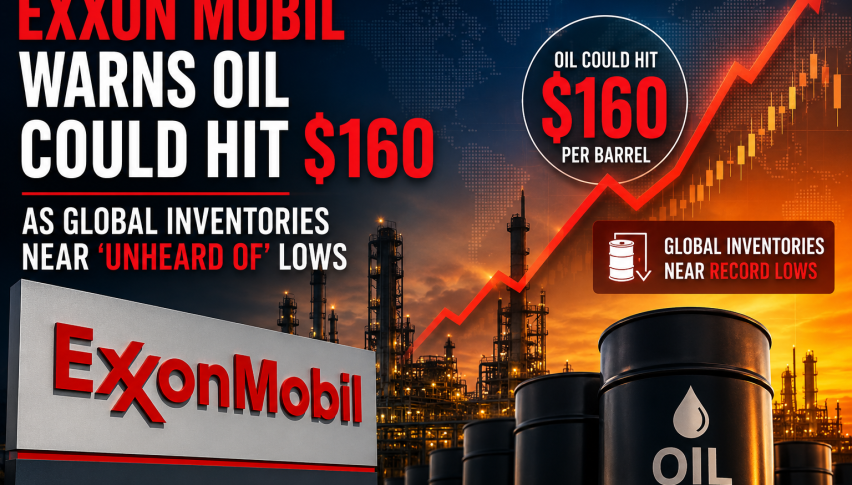
Exxon Mobil shares are back in focus after one of the company’s top executives warned that global oil inventories are approaching levels the industry rarely sees.
The warning comes as geopolitical disruptions continue to constrain crude flows through the Strait of Hormuz, a critical route that normally handles roughly 20% of global oil shipments. At the same time, Wall Street is becoming increasingly bullish on Exxon Mobil (NYSE: XOM), with several analysts raising price targets amid expectations of tighter energy markets.
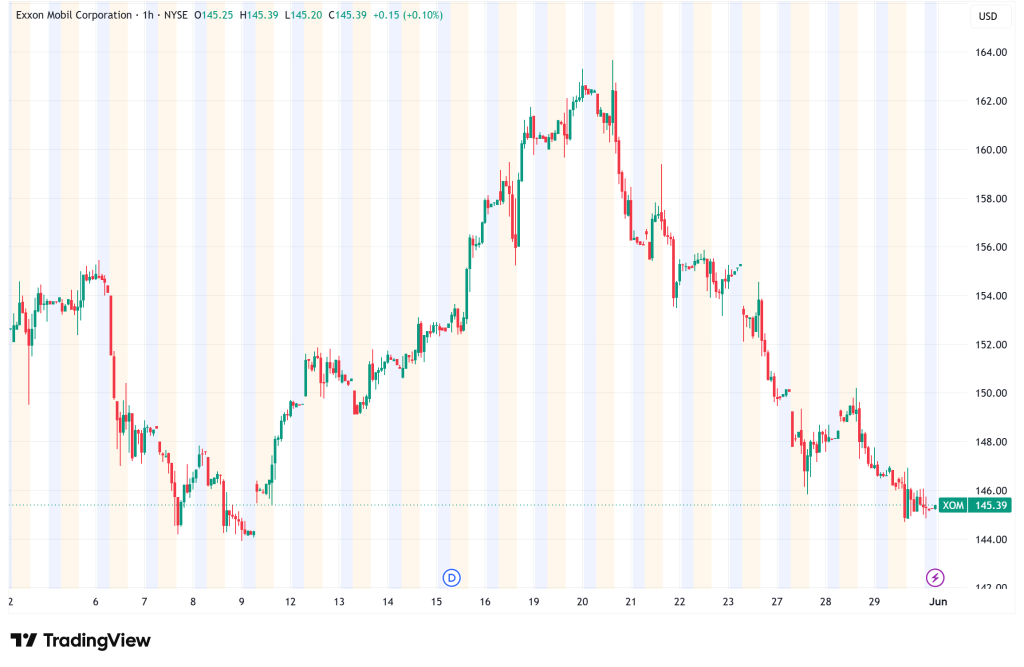
Exxon stock closed at $145.26, giving the company a market capitalization of approximately $602 billion.
Exxon Warns the Market Is Running Out of Cushion
Speaking at the Bernstein Strategic Decisions Conference in New York, Exxon Senior Vice President Neil Chapman delivered one of the strongest supply warnings heard from a major oil producer this year.
According to Chapman, inventories have masked a significant supply deficit that is becoming increasingly difficult to ignore.
Key takeaways from Exxon’s warning:
Global oil markets are missing roughly 11–12 million barrels per day of supply.
Strategic reserves and inventory drawdowns have temporarily offset shortages.
Global inventories are approaching what Chapman called “unheard of” levels.
Physical Brent crude could potentially reach $150–$160 per barrel before demand destruction restores balance.
The comments reinforce concerns that the market may be underestimating the long-term impact of ongoing Middle East disruptions.
Analysts Turn More Bullish on Exxon
Wall Street has started adjusting expectations accordingly.
Barclays Raises Target to $182
Barclays analyst Betty Jiang increased her price target on Exxon Mobil to $182 from $163 while maintaining an Overweight rating.
The firm cited:
Depleting global inventories
Shrinking OPEC spare capacity
Limited U.S. shale production response
Oil market tightness not yet reflected in energy equities
Mizuho Raises Forecasts
Mizuho also lifted its Exxon target to $175 from $159.
The firm expects:
Prolonged disruption from the Iran conflict
Higher refining margins
Stronger oil prices through 2026 and 2027
Better earnings visibility for integrated energy companies
The upgrades suggest analysts increasingly believe energy stocks remain undervalued relative to commodity fundamentals.
Exxon Continues Delivering Operational Strength
Beyond macro factors, Exxon remains one of the strongest operators in the global energy sector.
The company’s low-cost production portfolio gives it greater resilience across commodity cycles compared with many peers.
Venezuela Could Become Exxon’s Next Growth Opportunity
A potentially significant catalyst has emerged from Venezuela.
Exxon is reportedly exploring a return to Venezuelan oil production after nearly two decades away from the country. Discussions with government officials have intensified as Venezuela seeks foreign investment to rebuild its energy infrastructure.
The opportunity is substantial:
Venezuela holds some of the world’s largest proven oil reserves.
Exxon is evaluating how its heavy-oil expertise developed in Canada could apply to Venezuelan assets.
The Trump administration has expressed interest in reducing Russian, Chinese, and Iranian influence in Venezuela’s energy sector.
However, major hurdles remain:
Contract stability guarantees
International arbitration protections
Recovery of previously disputed assets
Political and regulatory risks
While no deal has been finalized, a successful re-entry could provide Exxon with another long-duration production growth engine.
Exxon Stock’s Valuation Remains a Point of Debate
Despite strong performance, analysts remain divided on valuation.
Some valuation models suggest Exxon trades at a discount to intrinsic value, while others argue shares already reflect much of the company’s expected growth.
That divergence reflects the market’s uncertainty around future oil prices more than company-specific concerns.
How to trade Exxon Mobil (XOM) stock this week
Technical Analysis: XOM Remains in a Strong Uptrend
On the daily chart, Exxon has pulled back from recent highs and is now trading below its 20-day and 50-day moving averages.
XOM has weakened in the short term, trading below its 20-day ($152.16) and 50-day ($154.86) moving averages, though it remains comfortably above its 200-day MA ($131.93), keeping the long-term uptrend intact.
The RSI of 38.58 suggests selling pressure has increased and the stock is approaching oversold territory. Meanwhile, the MACD remains negative at -1.02, indicating bearish momentum still dominates near-term trading.
A recovery above the 20-day and 50-day averages would be the first sign of improving momentum.
Key Support and Resistance Levels to Watch for Exxon Stock
Level Type
Approximate Area
Immediate Resistance
$150
Major Resistance
$160–$165
Near-Term Support
$138–$140
Secondary Support
$130
Major Trend Support
$120–$125
A sustained move above $150 would strengthen the bullish technical structure, while holding above $138 would preserve the current uptrend.
Long-Term Outlook: Exxon Is Positioned for Multiple Energy Cycles
Exxon increasingly offers investors exposure to three powerful themes simultaneously:
Global oil supply constraints
Rising energy security spending
Long-life, low-cost production assets
Guyana continues to emerge as one of the most profitable oil developments globally. The Permian Basin remains a major cash-flow engine. Meanwhile, the Pioneer acquisition expands Exxon’s scale advantage in North American shale.
If inventory shortages become as severe as management suggests, Exxon could be among the biggest beneficiaries given its integrated model spanning production, refining, chemicals, and global trading operations.
The biggest risk remains commodity volatility. Oil markets have historically swung from shortages to oversupply faster than investors expect.
For now, however, Exxon appears increasingly aligned with a tightening global energy market, stronger cash flows, and growing analyst optimism—factors that help explain why the stock continues trading near multi-year highs.
Lead Markets Analyst – Multi-Asset (FX, Commodities, Crypto)
Arslan Ali Butt serves as the Lead Commodities and Indices Analyst, bringing a wealth of expertise to the field. With an MBA in Behavioral Finance and active progress towards a Ph.D., Arslan possesses a deep understanding of market dynamics.
His professional journey includes a significant role as a senior analyst at a leading brokerage firm, complementing his extensive experience as a market analyst and day trader. Adept in educating others, Arslan has a commendable track record as an instructor and public speaker.
His incisive analyses, particularly within the realms of cryptocurrency and forex markets, are showcased across esteemed financial publications such as ForexCrunch, InsideBitcoins, and EconomyWatch, solidifying his reputation in the financial community.



 Save
Save