South African Rand: USD/ZAR Tests R17 but Reversal Signals Begin to Appear ahead of FED
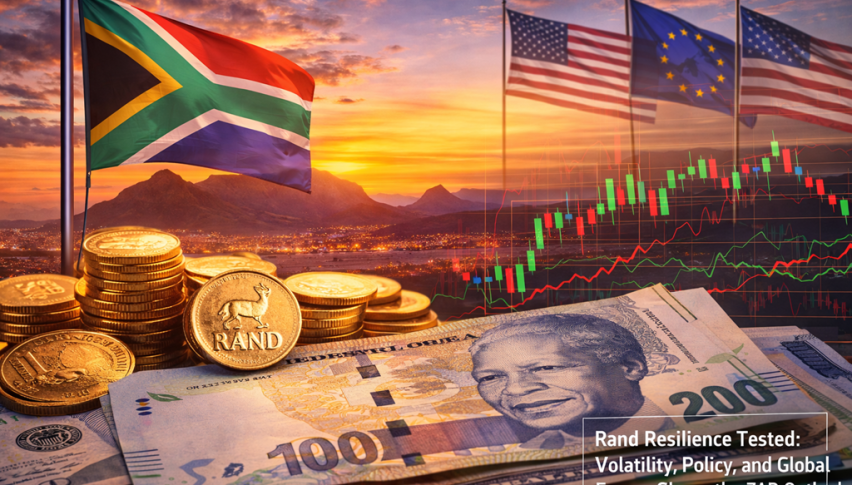
USD/ZAR climbed toward the R17 level after the SARB kept interest rates unchanged and renewed inflation concerns pressured the rand, but easing Middle East tensions and falling oil prices are now threatening to reverse the pair's latest advance.
Quick overview
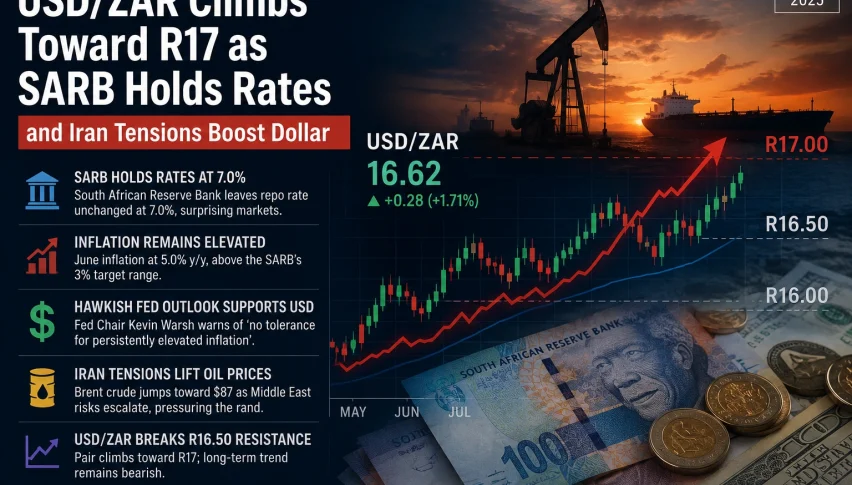
- USD/ZAR approached the R17 level as the SARB maintained interest rates, increasing pressure on the rand amid inflation concerns.
- Easing tensions in the Middle East and falling oil prices are beginning to counteract the rand's recent decline.
- The SARB's decision to hold rates at 7% has created uncertainty for the rand, complicating its recovery prospects.
- Upcoming U.S. economic data and Federal Reserve policy announcements are expected to influence the USD/ZAR exchange rate significantly.
Live USD/ZAR Chart
USD/ZAR climbed toward the R17 level after the SARB kept interest rates unchanged and renewed inflation concerns pressured the rand, but easing Middle East tensions and falling oil prices are now threatening to reverse the pair’s latest advance.
USD/ZAR Near R17 as SARB Decision Pressures Rand but Ceasefire Offers Relief
The USD/ZAR exchange rate extended its recovery last week, moving close to the psychologically important R17 level as the South African rand came under renewed pressure following the South African Reserve Bank’s latest policy decision. However, the rally is now showing signs of losing momentum as a pause in the Middle East conflict pushes oil prices lower and improves the outlook for the rand.
The pair’s latest price action suggests that the recovery may be vulnerable if USD/ZAR fails to sustain its gains above key resistance levels.
USD/ZAR Climbs Toward R17
USD/ZAR strengthened sharply after breaking above the important R16.50 resistance area, bringing the pair within reach of the R17 psychological level.
The move reflected a combination of domestic and global factors.
The rand weakened after the SARB left interest rates unchanged, while renewed geopolitical tensions and higher oil prices created additional pressure on South Africa’s inflation outlook.
However, the latest developments have started to shift the balance.
The United States has halted strikes against Iran, creating cautious optimism that diplomatic efforts could prevent further escalation. While a lasting agreement does not appear imminent, the pause in fighting has already contributed to a sharp decline in crude oil prices.
That could reduce inflationary pressure on South Africa and remove one of the key factors that recently weighed on the rand.
SARB Holds Rates at 7%
The SARB left its benchmark repo rate unchanged at 7.0% at its July monetary policy meeting.
The decision was reached by a 4–2 vote, despite expectations among some market participants for a 25-basis-point increase.
The central bank pointed to an improved inflation outlook and weak economic growth while maintaining its longer-term commitment to moving inflation toward its 3% target.
The decision nevertheless created uncertainty for the rand.
A less hawkish SARB potentially reduces one of the key sources of rand support: South Africa’s relatively high interest-rate differential compared with major developed economies.
The rand therefore faced renewed selling pressure, helping USD/ZAR move toward R17.
Inflation Creates a Difficult SARB Balancing Act
South African inflation remains an important risk.
Annual inflation increased to 5.0% in June, its highest level in two years, while core inflation rose to 4.1%, the strongest reading since September 2024.
Both measures remain above the SARB’s preferred 3% target, with the inflation outlook complicated by global commodity prices and geopolitical uncertainty.
SARB Governor Lesetja Kganyago has warned that renewed conflict in the Middle East could create additional inflationary pressure.
Higher oil and fertilizer prices could feed into transportation, food, and consumer costs. However, the recent pause in military action and sharp decline in crude prices could reduce some of these risks.
This leaves the SARB facing a difficult policy environment. Higher inflation could limit the scope for rate cuts, while weak economic growth makes aggressive monetary tightening more challenging.
Fed Decision Could Drive USD/ZAR Volatility
The Federal Reserve’s upcoming policy announcement will be another major catalyst for USD/ZAR.
The Fed is expected to keep interest rates unchanged in the 3.50%-3.75% range. Markets are nevertheless assigning some probability to a rate hike.
Softer-than-expected U.S. inflation and weaker labour-market data give policymakers room to wait. However, the Fed may still maintain a cautious or hawkish tone as underlying inflation remains above target.
For USD/ZAR, a hawkish Fed could support the dollar and limit the rand’s recovery.
Conversely, a more dovish message could weaken the dollar and increase selling pressure on the currency pair.
USD/ZAR Chart Daily – The 200 SMA Keeps the Pressure to the Downside

On the daily chart above, the trend has been bearish for more than a year, with moving averages acting as resistance during upside rice action. But the pair has now pushed above the 200 daily SMA in purple, opening the door for R17. However the price formed a doji candlestick up there and it has started to reverse lower.
On the monthly chart below, USD/ZAR seems to have bottomed at the 100 SMA (green) where it found support in the last two months. Last month we saw a rebound as the Rand weakened while the Dollar gained, but buyers are facing the 50 SMA (yellow) and in April the forex pair has reversed lower again. For the larger uptrend to resume, USD/ZAR would need to push above this moving average but sellers remain in control for 2 years and the downside is also at risk.
USD/ZAR Chart Monthly – Rebounding Off the 100 SMA

PCE Inflation and GDP Add to Market Risk
U.S. PCE inflation data will provide another important test for the dollar.
Markets expect core PCE inflation to remain elevated, although the annual rate could ease slightly. Headline inflation is also expected to slow as lower energy prices begin to filter through.
A softer reading could strengthen expectations for future Fed easing, potentially weighing on USD/ZAR.
The U.S. GDP report will also be closely watched. The Atlanta Fed’s GDPNow tracker is currently pointing to second-quarter growth of around 1.7%, slower than the 2.1% pace recorded in the first quarter.
A weaker economic reading could add to pressure on the dollar, while stronger-than-expected growth could reinforce expectations that U.S. interest rates will remain elevated.
USD/ZAR Faces a Potential Technical Reversal
The technical picture is becoming increasingly important.
USD/ZAR’s move toward R17 represented a significant recovery, but the pair has started showing signs of losing upward momentum as oil prices decline and geopolitical tensions ease.
If USD/ZAR fails to establish a sustained break above R17, sellers could regain control and push the pair back toward lower support levels.
A move below the recent breakout area around R16.50 would strengthen the case for a deeper reversal and potentially signal that the latest rally was only a temporary correction within the broader downtrend.
For now, the combination of a Middle East ceasefire, falling oil prices, upcoming U.S. data, and changing expectations for Fed policy creates a more uncertain outlook. While the rand remains vulnerable to domestic inflation and SARB policy uncertainty, the latest decline in oil prices could provide some relief. The next move in USD/ZAR may therefore depend on whether dollar strength can withstand the combined pressure of softer U.S. data and easing geopolitical risks.
- Check out our free forex signals
- Follow the top economic events on FX Leaders economic calendar
- Trade better, discover more Forex Trading Strategies
- Open a FREE Trading Account
- Read our latest reviews on: Avatrade, Exness, HFM and XM

Related Articles

Sidebar rates

Related Posts
 Save
SaveAva