Gold Price Forecast; XAU Tests the $4,500 Support as Higher Inflation and Fed Expectations Pressure Bullion
Gold remains under pressure as rising U.S. inflation expectations, stronger Treasury yields, and persistent dollar strength outweigh geopolitical tensions and ongoing uncertainty surrounding global trade and China-related market risks.

Quick overview
- Gold prices are under pressure due to rising U.S. inflation expectations, stronger Treasury yields, and a strong dollar, overshadowing geopolitical tensions.
- After a record rally, gold experienced its worst weekly decline of the year, falling approximately 3.7% as investors reassessed Federal Reserve interest rate cut expectations.
- Despite ongoing geopolitical tensions, gold's performance has been weak as inflation and interest rate narratives dominate market sentiment.
- Long-term support for gold remains from central bank buying and diversification strategies, particularly from emerging markets and China.
Live GOLD Chart

Gold remains under pressure as rising U.S. inflation expectations, stronger Treasury yields, and persistent dollar strength outweigh geopolitical tensions and ongoing uncertainty surrounding global trade and China-related market risks.
Gold Loses Momentum After Record Rally
Gold suffered its worst weekly decline of the year after investors sharply reassessed expectations for Federal Reserve interest rate cuts following another series of elevated U.S. inflation readings.
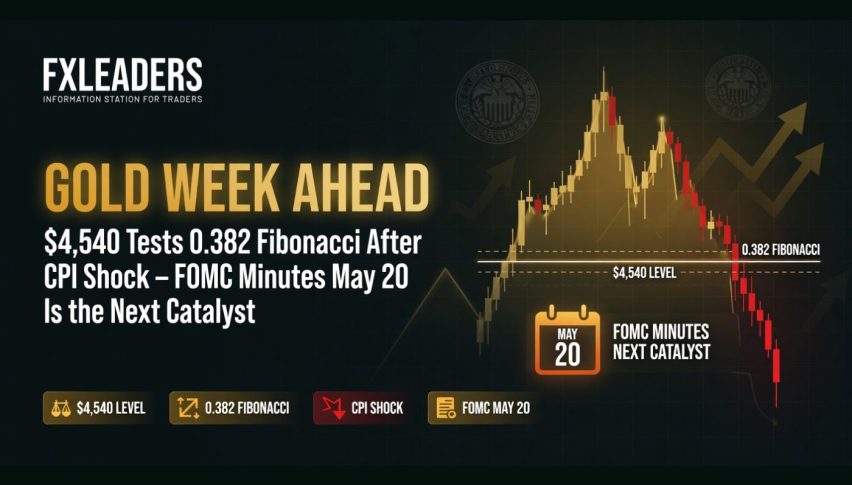
Spot gold settled near $4,540 last week, falling roughly 3.7% as traders reduced bullish positions that had previously been built around expectations for monetary easing.
The reversal reflects a major shift in market sentiment. Earlier this year, gold benefited from optimism that central banks would soon begin cutting interest rates. However, persistent inflation pressures are now forcing investors to reconsider how long rates may remain elevated.
At the same time, Treasury yields moved sharply higher, increasing competition from interest-bearing assets and reducing the appeal of non-yielding assets such as gold.
Higher Inflation and Fed Expectations Pressure Bullion
Three consecutive hotter-than-expected inflation reports significantly altered the outlook for U.S. monetary policy.
Markets increasingly believe the Federal Reserve may keep rates elevated for longer than previously expected, especially as inflation in services, shelter, and energy remains stubbornly high.
Several Federal Reserve officials have recently maintained a cautious tone regarding potential rate cuts, reinforcing expectations that policymakers remain focused on controlling inflation rather than supporting financial markets.
Higher interest rates typically create a difficult environment for gold because bullion does not generate income or yield. As government bond yields rise, investors often rotate toward fixed-income assets instead of precious metals.
The shift in expectations also pushed the U.S. dollar higher, creating another major headwind for gold prices.
CPI Report Becomes Critical for Gold
This week’s U.S. inflation data could become the next major catalyst for gold markets.
Key Economic Data Last Week
- Headline CPI came at 0.6% M/M as expected
- Core CPI expected at 0.3 came at 0.4% M/M
- CPI YoY jumped to UMPED TO 3.8% from 3.3%
- U.S. PPI Expected at 0.4% M/M came at 1.4%
Technical Damage — Retesting the Support
Technically, the correction was severe. Gold broke decisively below its 20-day simple moving average, ending a streak of consistent trend support. Attention quickly shifted to the 50-day moving average near $5,000 which was also broken and in late March we saw a decline below the early February low of $4,400, and XAU bottomed at $4,100.
Gold Chart Daily – The 50 SMA Rejected XAU

Gold found support at the 100 SMA (red) which is the last technical indicator to provide support. As a result, Gold rebounded and climbed above $5,000 but the 20 daily SMA (gray) turned into resistance, rejecting the price. However last week buyers pushed above the 20 SMA. On the weekly chart XAU found support at the 50 SMA (yellow) and formed a doji candlestick, which signaled the bullish reversal but the 20 SMA (gray) has stopped the bullish hopes.
Gold Chart Weekly – The 50 SMA Held As Support

The ability to hold above $4,000 carries psychological importance. Reclaiming such a major round-number threshold often stabilizes sentiment, especially after a period of forced liquidation. While volatility remains elevated, the ability to defend longer-term trend support suggests that structural buyers remain active.
Dollar Strength Continues Limiting Upside
The strong U.S. dollar remains one of the biggest obstacles for gold.
A stronger dollar increases the cost of gold for international buyers while simultaneously improving the attractiveness of dollar-based investments.
Rising oil prices have also indirectly supported the dollar because global energy transactions remain heavily denominated in U.S. currency. This relationship has reinforced the inverse correlation between gold and the dollar in recent weeks.
Although some investors continue viewing gold as a long-term hedge against inflation and geopolitical instability, the market currently appears more focused on rising yields and tighter monetary conditions.
Geopolitical Tensions Fail to Trigger Major Safe-Haven Buying
One of the most notable developments last week was gold’s inability to rally despite escalating tensions in the Middle East.
Normally, geopolitical instability involving Iran, the Strait of Hormuz, Israel, and broader regional conflicts would significantly increase safe-haven demand for bullion.
However, the inflation and interest rate narrative largely overwhelmed those traditional drivers.
Tensions remain elevated after President Donald Trump warned Iran that “the clock is ticking” for a peace agreement, while Iranian officials rejected what they described as unacceptable pressure tactics from Washington.
Additional instability surrounding Lebanon, Gaza, and regional energy infrastructure has also kept geopolitical risks elevated.
Still, gold’s weak performance despite these developments suggests investors currently view monetary policy and inflation as the dominant forces driving markets.
China and Central Bank Demand Offer Longer-Term Support
Despite short-term weakness, some structural factors continue supporting the broader gold market.
Central banks, particularly across emerging markets, remain active buyers of gold reserves as part of long-term diversification strategies. China continues playing an important role in global bullion demand as policymakers seek to reduce dependence on dollar-denominated assets.
However, slower economic growth in China and broader uncertainty surrounding global trade and semiconductor export restrictions could eventually weaken industrial and consumer demand across commodity markets more broadly.
Conclusion
Gold remains caught between powerful opposing forces. On one side, geopolitical tensions, central bank buying, and long-term diversification trends continue offering support. On the other, rising U.S. inflation, higher Treasury yields, persistent dollar strength, and fading expectations for Federal Reserve rate cuts are placing increasing pressure on bullion prices. While gold could still benefit from future geopolitical shocks or economic instability, the recent selloff highlights how sensitive the market has become to interest rate expectations and global macroeconomic conditions.
- Check out our free forex signals
- Follow the top economic events on FX Leaders economic calendar
- Trade better, discover more Forex Trading Strategies
- Open a FREE Trading Account
- Read our latest reviews on: Avatrade, Exness, HFM and XM

Related Articles
Sidebar rates

Related Posts
 Save
Save