DRAM ETF Explodes 87% in 50 Days as AI Memory Frenzy Pushes Assets Past $10B
Roundhill Memory ETF DRAM surges 87% since launch and becomes the fastest ETF ever to hit $10B as AI memory stocks soar. Buy DRAM stock?
Written by:
Arslan Ali Butt•Wednesday, May 27, 2026•3 min read
•Last updated: Wednesday, May 27, 2026
Quick overview
DRAM has surged approximately 87% since its launch, becoming one of the fastest-growing ETFs in history with over $10 billion in assets.
The ETF focuses on memory-chip manufacturers like Micron Technology, Samsung Electronics, and SK Hynix, which benefit from the increasing demand for AI infrastructure.
Investor interest has shifted from GPU makers to memory chips due to the high memory bandwidth requirements of AI systems, driving significant inflows into the DRAM ETF.
While the ETF shows strong momentum, analysts warn of concentration risks and potential volatility due to its focused investment strategy.
DRAM has become one of the hottest trades on Wall Street.
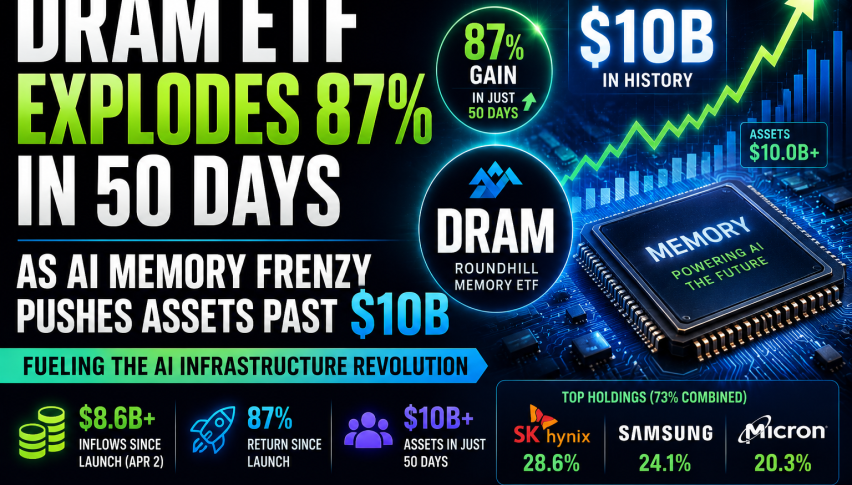
The AI-focused memory-chip ETF has surged roughly 87% since launching on April 2 and crossed $10 billion in assets in just 50 days — the fastest rise to that milestone for any ETF in history.
The rally reflects an extraordinary investor rotation into AI memory infrastructure as demand for high-bandwidth memory (HBM), DRAM, and AI storage systems explodes globally.
AI Memory Demand Is Creating a New ETF Phenomenon
Unlike broader semiconductor ETFs, DRAM offers concentrated exposure to memory-chip manufacturers directly benefiting from the AI infrastructure boom.
The ETF’s largest holdings include:
Micron Technology
Samsung Electronics
SK Hynix
Together, those three companies represent roughly 73%-74% of the portfolio.
That concentration has amplified gains as AI-related memory shortages tighten global supply and drive aggressive pricing power across the sector.
The ETF has also benefited from explosive inflows.
According to Financial Times reporting, DRAM attracted roughly $8.6 billion in inflows shortly after launch as investors rushed into targeted AI infrastructure trades.
Why Wall Street Is Suddenly Obsessed With Memory Chips
For much of the AI rally, investors focused heavily on GPU makers like NVIDIA.
Now attention is shifting toward memory.
AI systems require enormous amounts of memory bandwidth to train and run increasingly complex models. That demand is fueling shortages across HBM and advanced DRAM markets.
Key industry drivers include:
AI data center expansion
HBM shortages
AI inference growth
Hyperscaler infrastructure spending
Agentic AI workloads
Enterprise AI deployment
Goldman Sachs estimates roughly $7.6 trillion could be spent globally on AI data center buildouts over the next five years.
Memory suppliers sit directly at the center of that spending cycle.
DRAM Is Also Becoming a Momentum Trade
The ETF’s rise increasingly resembles a momentum-driven AI trade.
Wall Street firms are already attempting to launch leveraged versions of the product, including proposed 2x leveraged DRAM ETFs.
That trend has raised concerns among some analysts.
Morningstar researchers warned that thematic ETF investors often chase momentum near peaks, particularly during speculative technology cycles.
The structure of DRAM also introduces concentration risk.
Unlike diversified semiconductor funds, DRAM is effectively a high-conviction bet on a handful of memory companies.
That creates both massive upside potential and elevated downside volatility.
DRAM stock: Should you buy Roundhill Memory ETF in 2026?
DRAM Technical Analysis: One of the Strongest AI Charts in the Market
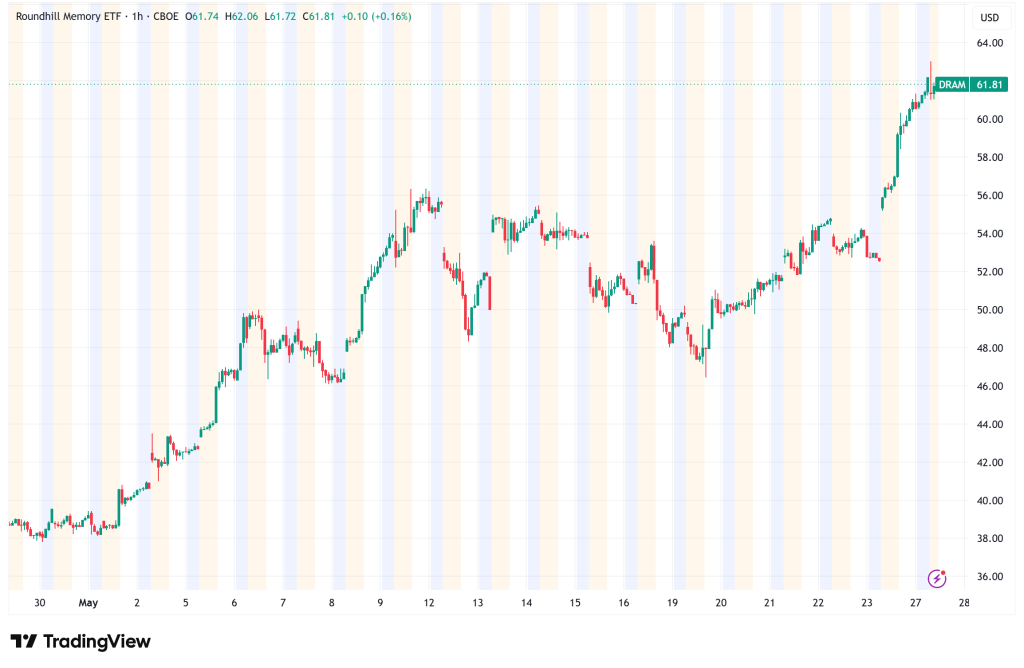
Technically, DRAM has entered a near-parabolic uptrend since launch.
The ETF continues making aggressive higher highs as institutional flows pour into AI infrastructure and memory-related trades.
RSI is approaching heavily overbought territory, signaling that DRAM’s rally may be becoming stretched after its near-parabolic surge. MACD remains firmly bullish with no confirmed reversal signals yet, but the biggest near-term risk is aggressive profit-taking and momentum unwinding after the ETF’s historic run.
Key Technical Signals
Shares surged nearly 90% within weeks of launch
Volume expanded sharply during recent breakouts
Momentum remains heavily bullish
Institutional inflows continue accelerating
AI infrastructure sentiment remains dominant
The chart currently reflects one of the strongest momentum trades in the entire AI sector.
Moving Averages Confirm Strong Momentum
DRAM continues trading well above its:
20-day moving average
50-day moving average
The ETF’s short trading history limits long-term moving-average analysis, but current trend structure remains decisively bullish.
As long as DRAM holds above medium-term support zones, momentum buyers likely remain active.
Key Support and Resistance Levels for DRAM Stock
Level Type
Approximate Area
Immediate Resistance
$62–$65
Psychological Resistance
$70
Near-Term Support
$54–$56
Secondary Support
$45–$48
Major Trend Support
$35–$38
A breakout above $65 could trigger another momentum-driven leg higher as inflows continue accelerating.
However, failure to hold the $54–$56 zone could lead to aggressive volatility given the ETF’s concentrated structure.
Long-Term Outlook: DRAM Is a High-Conviction Bet on the AI Memory Supercycle
The long-term investment case for DRAM depends almost entirely on one thesis:
AI memory demand is entering a structural multi-year expansion cycle.
If hyperscaler AI spending, enterprise AI adoption, and HBM shortages continue, memory-chip companies could remain among the biggest winners of the next phase of AI infrastructure growth.
Key long-term growth drivers include:
HBM demand acceleration
AI inference expansion
AI data center spending
Enterprise AI deployments
Memory pricing power
Supply constraints
Still, risks remain elevated.
The ETF is highly concentrated, highly volatile, and heavily dependent on continued AI spending momentum. Any slowdown in AI infrastructure investment, memory oversupply, or pricing normalization could trigger sharp drawdowns.
For now, however, Wall Street appears fully committed to the AI memory trade.
Lead Markets Analyst – Multi-Asset (FX, Commodities, Crypto)
Arslan Ali Butt serves as the Lead Commodities and Indices Analyst, bringing a wealth of expertise to the field. With an MBA in Behavioral Finance and active progress towards a Ph.D., Arslan possesses a deep understanding of market dynamics.
His professional journey includes a significant role as a senior analyst at a leading brokerage firm, complementing his extensive experience as a market analyst and day trader. Adept in educating others, Arslan has a commendable track record as an instructor and public speaker.
His incisive analyses, particularly within the realms of cryptocurrency and forex markets, are showcased across esteemed financial publications such as ForexCrunch, InsideBitcoins, and EconomyWatch, solidifying his reputation in the financial community.


 Save
Save