South Africa Hikes Interest Rate to 7%, Adding Strain to Consumers and Housing Market, SARB Repo Rate Up by 25bps
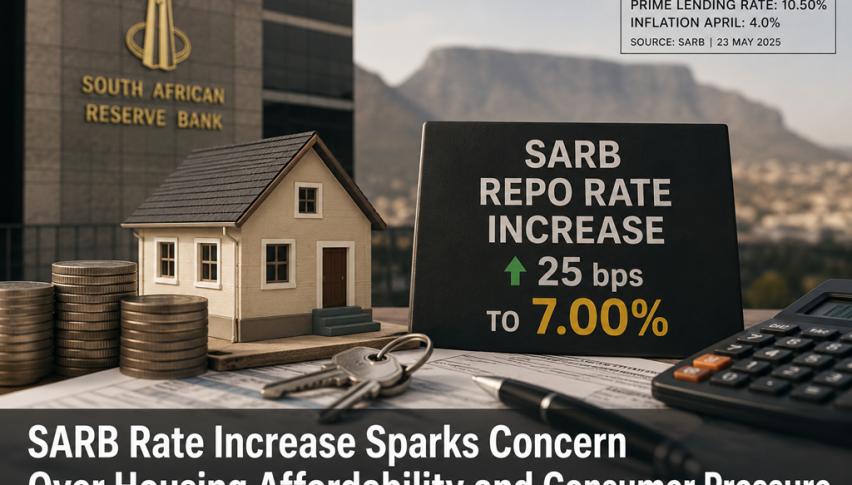
The repo rate was increased by 25 basis points to 7.00% by the South African Reserve Bank (SARB), underscoring worries about growing inflation pressures and mounting pressure on households and the real estate sector.
Quick overview
- The South African Reserve Bank has raised the repo rate by 25 basis points to 7.00% due to rising inflation pressures.
- The decision reflects a split vote within the Monetary Policy Committee, indicating differing views on the necessity of further tightening.
- Property industry leaders express concern that higher borrowing costs will exacerbate challenges in the housing market.
- The increase in the repo rate translates to higher monthly repayments for homeowners, adding further strain to household budgets.
The repo rate was increased by 25 basis points to 7.00% by the South African Reserve Bank (SARB), underscoring worries about growing inflation pressures and mounting pressure on households and the real estate sector.
SARB Raises Repo Rate Amid Inflation Pressures
The South African Reserve Bank has increased the repo rate by 25 basis points following its latest Monetary Policy Committee (MPC) meeting. The decision lifts the repo rate to 7.00%, while the prime lending rate rises to 10.50%, further tightening financial conditions for households and businesses.
The vote was split, with four members supporting the hike and two preferring no change, highlighting differing views within the committee on the timing and necessity of further tightening.
Inflation Outlook Remains Elevated
The rate decision comes against a backdrop of persistent inflationary pressure. Headline consumer inflation rose to 4.0% in April, driven largely by an 11% increase in fuel prices, which continues to filter through the broader economy.
The SARB now expects inflation to average 4.4% in 2026 and 3.7% in 2027, before gradually converging toward its 3% target. However, the central bank warned that risks remain tilted to the upside, particularly from global energy markets and domestic cost pass-through effects.
Artificial Global and Domestic Risk Scenarios Highlighted
SARB Governor Lesetja Kganyago said the MPC considered multiple risk scenarios that could further elevate inflation and weaken growth.
These included a prolonged Middle East conflict that could disrupt oil supply and pressure the rand, the potential onset of El Niño conditions affecting agricultural output, and broader non-linear inflation effects where shocks are amplified through the economy.
Under more adverse assumptions, inflation could rise above 5%–6%, potentially requiring additional interest rate increases. Kganyago noted that all scenarios pointed to higher inflation and weaker growth prospects.
Property Sector Reacts to Rate Hike
Property industry leaders expressed concern that higher borrowing costs will add pressure to an already strained housing market.
Samuel Seeff, chairman of Seeff Property Group, described the move as premature and warned it could further weaken consumer confidence. He highlighted that households are already facing rising fuel costs, high interest rates, and constrained disposable income, all of which are weighing on demand.
Andrew Golding, CEO of Pam Golding Property Group, noted that banks continue to support the residential market through flexible lending strategies, including zero-deposit options and cost-inclusive bonds. However, he warned that affordability challenges are becoming increasingly significant, particularly for lower- and middle-income buyers.
BetterBond’s national head of sales, Bradd Bendall, offered a more balanced view, stating that the housing market remains resilient despite the tightening cycle. He said demand in desirable areas continues to hold up, although affordability pressures remain a key constraint for first-time buyers.
Impact on Homeowners and Bond Costs
The latest 25 basis point increase translates into higher monthly repayments across typical bond sizes. For a R1 million bond, the increase is approximately R168 per month, while a R2 million bond sees an increase of about R335 per month.
Based on the average home price of R1,695,257, monthly repayments rise by roughly R284, adding further strain on household budgets already under pressure.
The extra costs on bonds for property prices between R850,000 and R5 million can be found below:
| Bond value | March 2026 (10.25%) |
May 2026 (10.50%) |
Extra |
|---|---|---|---|
| R850,000 | R8,344 | R8,486 | +R142 |
| R1,000,000 | R9,816 | R9,984 | +R168 |
| R1,500,000 | R14,725 | R14,976 | +R251 |
| R1,695,257 | R16,641 | R16,925 | +R284 |
| R2,000,000 | R19,633 | R19,968 | +R335 |
| R2,500,000 | R24,541 | R24,960 | +R419 |
| R3,000,000 | R29,449 | R29,951 | +R502 |
| R3,500,000 | R34,358 | R34,943 | +R585 |
| R4,000,000 | R39,266 | R39,935 | +R669 |
| R4,500,000 | R44,174 | R44,927 | +R753 |
| R5,000,000 | R49,082 | R49,919 | +R837 |
Conclusion
The SARB’s decision to raise the repo rate to 7.00% underscores its growing concern over persistent inflation risks and external shocks. While aimed at stabilising price pressures and anchoring expectations, the move intensifies financial strain on households and adds pressure to South Africa’s already fragile property market. The outlook now hinges on whether inflation risks ease or force further tightening in the months ahead.
- Check out our free forex signals
- Follow the top economic events on FX Leaders economic calendar
- Trade better, discover more Forex Trading Strategies
- Open a FREE Trading Account
- Read our latest reviews on: Avatrade, Exness, HFM and XM

Related Articles

Sidebar rates

Related Posts
 Save
Save