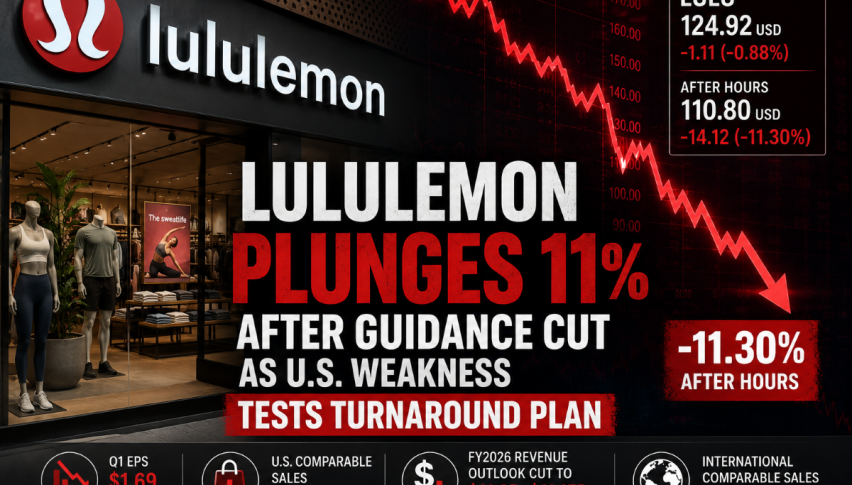
Lululemon Plunges 11% After Guidance Cut as U.S. Weakness Tests Turnaround Plan
Lululemon slides after cutting FY2026 guidance as U.S. sales weakness, tariffs, markdowns, and leadership change pressure the LULU stock.
•
Last updated: Friday, June 5, 2026
Quick overview
- Lululemon Athletica's stock fell over 11% after the company cut its full-year revenue and EPS outlook despite a small first-quarter earnings beat.
- Comparable sales in North America dropped by 5%, while international sales, particularly in China, showed growth but were insufficient to offset domestic weakness.
- Key concerns include weak U.S. demand, higher tariff costs, and gross margin pressure, leading to negative EPS revisions and uncertainty surrounding the CEO transition.
- Lululemon's long-term outlook hinges on stabilizing North American sales, improving product innovation, and easing tariff pressures.
- Check out our free forex signals
- Follow the top economic events on FX Leaders economic calendar
- Trade better, discover more Forex Trading Strategies
- Open a FREE Trading Account
- Read our latest reviews on: Avatrade, Exness, HFM and XM
ABOUT THE AUTHOR
See More

Arslan Ali Butt
Lead Markets Analyst – Multi-Asset (FX, Commodities, Crypto)
Arslan Ali Butt serves as the Lead Commodities and Indices Analyst, bringing a wealth of expertise to the field. With an MBA in Behavioral Finance and active progress towards a Ph.D., Arslan possesses a deep understanding of market dynamics.
His professional journey includes a significant role as a senior analyst at a leading brokerage firm, complementing his extensive experience as a market analyst and day trader. Adept in educating others, Arslan has a commendable track record as an instructor and public speaker.
His incisive analyses, particularly within the realms of cryptocurrency and forex markets, are showcased across esteemed financial publications such as ForexCrunch, InsideBitcoins, and EconomyWatch, solidifying his reputation in the financial community.
Related Articles



Sidebar rates

Related Posts
 Save
Save