Nvidia NVDA Stock Jumps on PC Superchip Push, Yet Valuation and Costs Keep Investors Cautious
Even while investor optimism is still being tempered by valuation limits, rising prices, and geopolitical dangers, Nvidia's most recent rally demonstrates increasing hope following the debut of its PC chip processor.
Quick overview
- Nvidia's stock rebounded over 6% following the launch of its RTX Spark superchip, signaling renewed optimism in its growth potential.
- Despite strong earnings of $81.6 billion for Q1 FY27, investor sentiment remains cautious due to rising operational costs and geopolitical risks.
- Nvidia's entry into the PC processor market intensifies competition with Intel and AMD, raising concerns about market dynamics and demand concentration.
- The company's significant buybacks and dividends provide short-term support, but broader valuation and competition concerns temper long-term investor confidence.
Even while investor optimism is still being tempered by valuation limits, rising prices, and geopolitical dangers, Nvidia’s most recent rally demonstrates increasing hope following the debut of its PC chip processor.
Nvidia Rebounds After Sharp Pullback
Shares of NVIDIA Corporation experienced a volatile week, initially sliding toward the $200 zone as investors reassessed stretched valuations, rising operational costs, and persistent geopolitical uncertainty. Despite reporting another exceptionally strong earnings cycle, sentiment remained fragile, reflecting a market increasingly sensitive to forward-looking risks rather than headline results.
However, momentum shifted sharply in Monday’s session, with the stock rising more than 6% after a major product announcement that reignited optimism around Nvidia’s long-term growth trajectory.
AI PC Push Signals Further Expansion
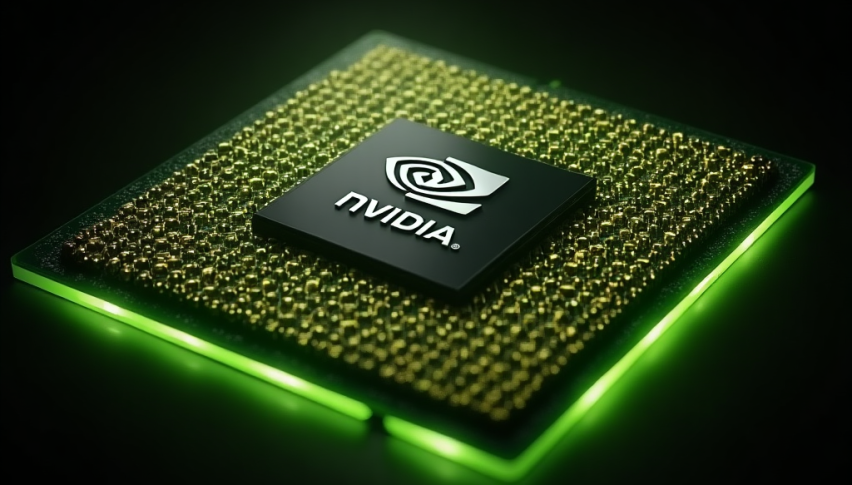
The latest catalyst came from Nvidia’s unveiling of its RTX Spark superchip, the company’s first processor designed specifically for personal computers. This marks a notable strategic shift, positioning Nvidia more directly against long-established PC chip leaders.
The move places Nvidia into more direct competition with Intel Corporation, which has historically dominated the PC processor market. The announcement also added pressure on Advanced Micro Devices, Inc., as investors reassessed competitive dynamics in the consumer and hybrid computing space.
Markets reacted quickly, with both Intel and AMD shares coming under pressure as investors evaluated the potential disruption from Nvidia’s deeper expansion into CPU-adjacent markets. The development underscores Nvidia’s ambition to extend its influence beyond GPUs and into broader computing architecture.
Technical Picture Reflects Volatility
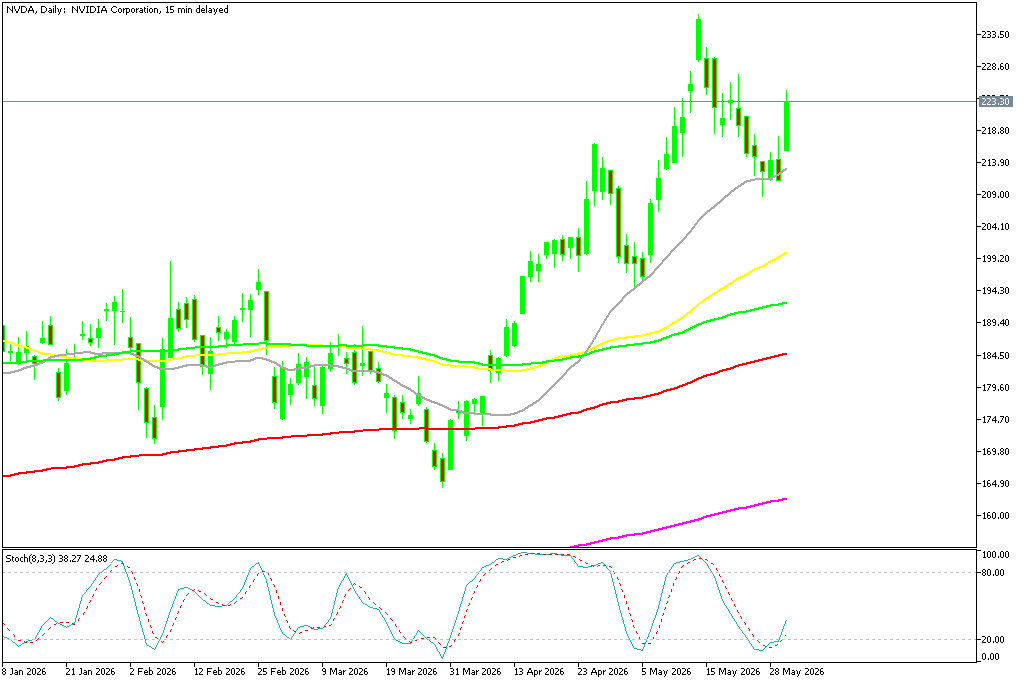
Nvidia’s technical setup mirrors the shifting sentiment. The stock slipped to its 20-day simple moving average (gray) in early May, but reversed back up, so it provided reliable support and NVDA reached a new high of $236 last week before earnings. But then the stock reversed down and sellers tested the 20 SMA again just above $200, which it held for the second time and the rebound has been considerable, taking NVDA above $220.
NVDA Chart Daily – The 20 SMA Held as Support
Strong Earnings Undermined by Forward Risks
Despite strong quarterly performance, Nvidia’s results did little to stabilize sentiment. The company posted revenue of $81.6 billion for Q1 FY27, driven largely by sustained demand in its Data Center segment, which remains the backbone of its growth.
Yet the market response remained muted, suggesting that expectations may already be priced at elevated levels. Investors appear increasingly focused on whether Nvidia can sustain its growth trajectory as competition intensifies and global demand patterns normalize.
Geopolitical Pressure and Market Concentration Risks
Geopolitical tensions continue to weigh on the outlook. Nvidia has indicated that US export restrictions will likely limit meaningful Data Center revenue from China in the near term, removing access to one of the world’s most significant semiconductor demand regions.
This constraint increases Nvidia’s reliance on a concentrated base of North American cloud providers, raising concerns about demand concentration risk. At the same time, export limitations add uncertainty to medium-term revenue diversification strategies.
Rising Costs and Capital Intensity Concerns
Another key pressure point is the rapid increase in operating expenses, which rose to $7.6 billion as Nvidia continues to invest heavily in research, infrastructure, and next-generation chip development.
While cash generation remains robust, with operating cash flow exceeding $50 billion, capital intensity is also rising. Investors are increasingly cautious about whether future margin expansion can be sustained as competitive pressure forces continued high spending.
Buybacks Support, but Confidence Still Fragile
Nvidia returned nearly $20 billion to shareholders through buybacks and dividends, alongside a new $80 billion repurchase authorization. While these measures provide near-term support, they have not fully offset broader concerns.
Ultimately, despite strong earnings, product innovation, and aggressive capital returns, Nvidia’s outlook is increasingly shaped by valuation sensitivity, geopolitical uncertainty, and intensifying competition—factors that continue to cap investor enthusiasm even during periods of strong operational performance.
- Check out our free forex signals
- Follow the top economic events on FX Leaders economic calendar
- Trade better, discover more Forex Trading Strategies
- Open a FREE Trading Account
- Read our latest reviews on: Avatrade, Exness, HFM and XM

Related Articles
Sidebar rates

Related Posts
 Save
Save