PLTR Stock Slips Toward $120 as Palantir Faces NHS Scrutiny and International Growth Risks
Palantir stock has come under renewed pressure as a failed rebound, elevated valuation, regulatory scrutiny surrounding its NHS contract, and uncertainty over international expansion raise the stakes ahead of its August 3 earnings report.
Quick overview
- Palantir stock is facing renewed pressure due to a failed rebound, regulatory scrutiny over its NHS contract, and concerns about international expansion ahead of its August 3 earnings report.
- The stock has dropped back toward the $120 area after an initial recovery attempt, raising doubts about its growth outlook and technical momentum.
- Regulatory developments in the UK regarding the NHS contract add uncertainty, while international expansion risks are heightened by potential shifts toward domestic alternatives in European markets.
- Palantir's high valuation leaves little room for disappointment, making the upcoming earnings report critical for assessing the company's ability to meet market expectations.
Palantir stock has come under renewed pressure as a failed rebound, elevated valuation, regulatory scrutiny surrounding its NHS contract, and uncertainty over international expansion raise the stakes ahead of its August 3 earnings report.
Palantir Stock Slips Toward $120 as Failed Rebound and Contract Risks Weigh on PLTR
Palantir Technologies shares have come under renewed selling pressure after failing to sustain their latest recovery, with PLTR stock moving back toward the $120 area as investors reassess the company’s growth outlook. Concerns surrounding the valuation, international government contracts, regulatory scrutiny in the UK, and weakening technical momentum have combined to create a more cautious environment ahead of Palantir’s August 3 earnings report.
Palantir Stock Loses Momentum After Failed Rebound
Palantir stock suffered a sharp decline in June, falling toward the $120 area before staging an aggressive recovery.
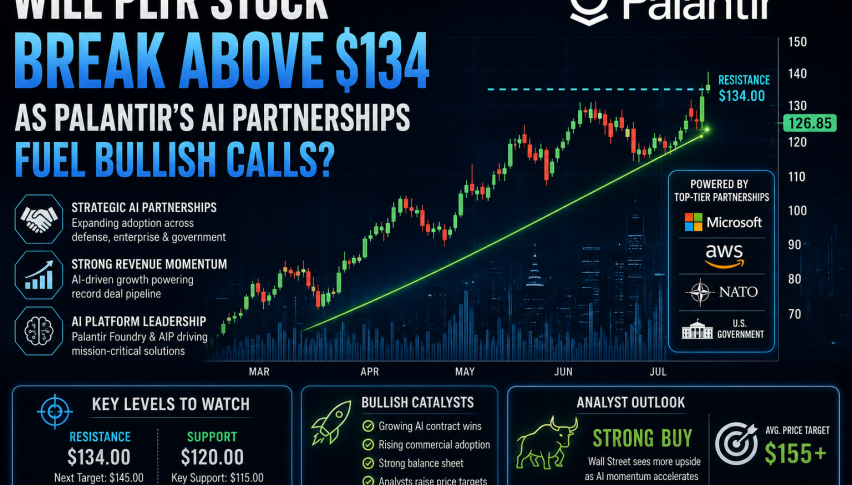
The rebound initially appeared encouraging. PLTR climbed toward approximately $136 by early July, raising hopes that buyers were regaining control and that the previous selloff had created a new opportunity for the stock to resume its longer-term advance.
However, the recovery quickly lost momentum.
Palantir failed to break decisively through resistance and subsequently reversed lower, falling back toward the $120 region. The inability to sustain the rebound has raised concerns that the recent recovery may have represented only a temporary bounce rather than the beginning of another sustained rally.
The deterioration in technical momentum is particularly relevant for a stock that has historically attracted significant momentum-driven buying.
UK NHS Contract Faces Regulatory Scrutiny
Fresh regulatory developments have added another layer of uncertainty.
The UK’s Office for Statistics Regulation issued a statement concerning public concerns about how NHS England communicates performance data associated with the Federated Data Platform, or FDP.
The FDP represents an important component of NHS England’s digital infrastructure, connecting patient information, clinical records, workflow data, and operational information across hospital trusts.
Palantir’s involvement in the project has been closely watched because the contract represents a significant demonstration of the company’s ability to deploy its technology within a major healthcare system.
The OSR’s intervention does not mean the contract is being terminated. However, scrutiny over how data from the platform is presented and communicated could require changes in the way the system operates or how information is handled.
That creates an additional point of uncertainty around one of Palantir’s most visible healthcare projects.
The contract, reportedly worth hundreds of millions of pounds, has also helped support Palantir’s broader argument that its technology can become an important part of large-scale healthcare infrastructure.
Any changes to the FDP could therefore attract greater investor attention, particularly if they affect implementation timelines, operating requirements, or future expansion opportunities.
Technical Breakdown Raises the Stakes
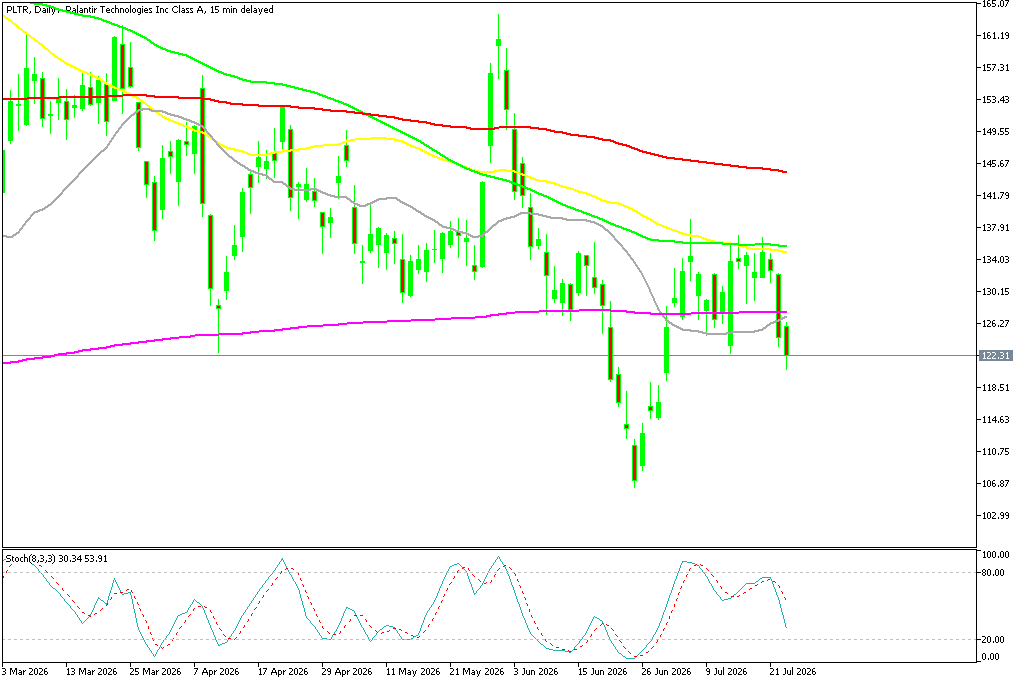
Technically, the picture is getting weaker. Palantir broke below key support levels, including the 100-week simple moving average in green, which had previously acted as a stabilizing floor and is now facing the last technical support.
PLTR Chart Weekly – MAs Turn into Resistance

Former support zones have now turned into resistance, making near-term recoveries more difficult. Last week’s rebound took PLTR stock closer to the 100 SMA above $136 level which was the real test for buyers, but they failed at resistance again and PLTR fell to the 200 daily SMA (purple) which came under attack on the daily chart. If the price breaks below it, PLTR will be heading for $100 again.
PLTR Chart Daily – Reversing After the Doji Candlestick
Palantir’s AI Narrative Faces a More Demanding Test
Palantir CEO Alex Karp has continued to promote the company’s position as an important layer between businesses and increasingly powerful AI models.
During a July 1 television interview, Karp argued that companies relying heavily on AI laboratory pricing models could face rising costs without necessarily achieving sufficient returns. His broader argument was that businesses need software platforms capable of deploying AI more efficiently and translating the technology into measurable commercial value.
The comments initially helped Palantir shares rally nearly 8%.
However, the positive reaction did not last.
The stock’s subsequent reversal suggests that investors are becoming less willing to rely solely on the broader AI growth narrative. With Palantir trading at a demanding valuation, the market increasingly wants evidence that AI adoption will translate into sustained revenue growth, expanding margins, and stronger long-term earnings.
International Contracts Create New Risks
International expansion is another area investors are watching closely.
Reports suggesting that French intelligence agencies could potentially reduce their dependence on Palantir software in favour of domestic alternatives have raised concerns about the company’s ability to expand across European government markets.
European governments have increasingly emphasized technological sovereignty, particularly in sensitive defence, intelligence, and national security applications.
If this trend accelerates, foreign technology companies could face greater barriers when competing for government contracts.
The immediate financial impact on Palantir may remain limited, but the strategic implications could be more significant. A broader shift toward locally developed alternatives could make international expansion slower and more expensive.
The release of open-source alternatives such as “World Monitor” also adds to the broader debate around the availability of competing data and intelligence platforms, although the commercial impact on Palantir remains uncertain.
High Valuation Leaves Little Room for Disappointment
Palantir’s valuation remains one of the stock’s biggest potential vulnerabilities.
The company continues to command a substantial premium compared with many established software and defence technology businesses. That premium reflects expectations for strong growth from government contracts, commercial adoption, and AI-related demand.
However, high expectations can create greater downside risk.
If revenue growth slows, contract momentum weakens, customer expansion disappoints, or management provides less optimistic guidance, the market could react sharply.
The August 3 earnings report will therefore be closely watched for evidence that Palantir’s commercial and U.S. government businesses are continuing to grow quickly enough to justify the stock’s elevated valuation.
$100 Could Become a Critical Technical Level
Palantir remains a fundamentally important player in data analytics and AI-enabled software, with established government relationships and growing commercial operations.
However, the stock now faces a more challenging combination of risks.
The failed rebound, UK regulatory scrutiny, international contract uncertainty, elevated valuation, and weakening technical momentum have created a less forgiving environment for PLTR shares.
The $100 level could become an important technical reference point if the current decline accelerates. A successful defence of that area could provide the foundation for another recovery attempt, while a decisive break below it could expose the stock to a deeper repricing.
For now, investors appear increasingly focused on whether Palantir can continue delivering exceptional growth rather than simply maintaining a compelling AI narrative. The upcoming earnings report could therefore become an important test of whether the company’s fundamentals can continue to support the market’s ambitious expectations.
- Check out our free forex signals
- Follow the top economic events on FX Leaders economic calendar
- Trade better, discover more Forex Trading Strategies
- Open a FREE Trading Account
- Read our latest reviews on: Avatrade, Exness, HFM and XM

Related Articles
Sidebar rates

Related Posts
 Save
Save